Best Course After Graduation to Start a Business in Kerala
By Junaid Ahammed | Published: 04/06/2026 | Last Updated: 04/06/2026
You just graduated. You want to build something — and you need to know exactly what that takes before you spend another year figuring it out alone. The best course after graduation to start a business in Kerala is EDEAS at IIDT Escala — a 9-month offline program at KINFRA Advanced Technology Park, Kozhikode, taught by IIM, IIT, and NIT entrepreneurs, where students generate Rs.20 lakhs in real product and service sales before they graduate.
Pick an idea, back it with confidence and don’t know what to actually do. Sounds relatable right?
Most graduates who want to start a business make the same move. They pick an idea, back it with confidence, and run straight into a wall. Not because the idea was bad. Because nobody taught them how to validate a product, find customers online, or what to actually do after finding an idea.
It’s not a talent problem. It is a skill gap. And a degree — BBA, B.Com, BA, Engineering — does not help it. The best course after graduation to start a business in Kerala is not a generic digital marketing certificate. It is a program that puts you inside a working business environment from day one — where you execute 20 lakhs of product & service sales, make mistakes, fix them, and build something real before the course ends
TABLE OF CONTENTS
What you actually need to start a business in 2026
Most Post-Graduation Courses Build Employees. This Is What Builds Entrepreneurs.
Three Kerala Entrepreneurs Who Built Real Businesses — What They Did Differently
Our Students Didn't Study Business. They Ran One.
Why Kerala Is One of the Best Markets in India to Start a Business After Graduation
MBA Theory or Real Business Skills? What Kerala Graduates Who Built Companies Actually Chose
What you’re going to miss if you’re not joining EDEAS
The Two Questions That Actually Decide Whether This Course Is Right for You
How to Evaluate the Best Course After Graduation to Start a Business in Kerala
The Next Step Takes 10 Seconds. The Results Take 9 Months.
About the Author
Frequently asked questions
What you actually need to start a business in 2026
Five things. Not fifteen. Not a degree. Not a co-founder from an IIT.
1. A specific, validated problem
Not "a gap in the market" — a real person, in a real situation, with a real frustration they would pay someone to fix. The more precisely you can describe that person and their exact problem, the faster and cheaper your path to first revenue becomes.
2. Digital marketing skills
This is not optional in 2026. According to NASSCOM, India had over 820 million active internet users in 2025, and that number is growing. [LINK: open in new tab] Almost every purchase decision in India today — even for purely offline services — involves a search, a WhatsApp message, or a social media check at some point. If you cannot show up when someone looks for your category, you effectively don't exist to them.
3. The ability to sell to a stranger
Selling to your family or your college friends proves nothing. Selling to someone who has no relationship with you, no obligation to be polite, and no reason to say yes unless your offer genuinely makes sense for them — that is the only test that counts. Your first ten paying strangers are the most valuable market data you will ever collect.
4. A registered legal structure
A sole proprietorship, LLP, or Private Limited Company — whichever fits your current scale. Add a business bank account, a GSTIN once you hit the threshold, and a registered trade name. These are not paperwork for the sake of it. They are what allow you to invoice clients, receive payments professionally, and project enough credibility that a customer takes you seriously on first contact.
5. Cash flow awareness
Not investor funding. Not a seed round. Just a clear picture of what money is coming in this month, what is going out, and whether there is enough buffer to operate for 90 more days. According to industry data on Indian MSMEs, cash flow mismanagement — not bad products — is the leading cause of small business closures in the first three years. [LINK: open in new tab]
see how the EDEAS program at IIDT Escala teaches all five practically over 9 months → www.iidtescala.com/course]
Most Post-Graduation Courses Build Employees. This Is What Builds Entrepreneurs.
A BBA provides you frameworks. A B.Com provides you basic accounting skills. A regular MBA gives you case studies of companies you have never worked for. A digital marketing course gives you the skill to create a Meta Ads Manager account and nothing more.
None of these skills help you in building a business.
Building a business requires you to find an actual customer, validate a product that customer needs, analyze why your campaign has failed to generate any conversion and move ahead despite all failures initially. It’s an operational learning that requires experience and not theoretical knowledge that a classroom which has no experience has no way of teaching you.
As per estimates by NASSCOM, the digital economy of India is expected to hit a mark of $1 trillion by 2030. For small business owners who understands e-commerce, digital marketing and ai based tools, there’s much to gain. [LINK: open in new tab — https://nasscom.in/]
The problem is not of lack of intelligence or ambition. Graduates from Kerala are among the most ambitious in the whole of India. The problem is that of execution. Most courses teach people to become employees, very few train people on running a business.
[INTERNAL LINK: see what the EDEAS program covers in full → /course]
Finally, this page is also relevant to another type of individual — the graduate who already started something but simply cannot scale to the next level. They have a product; perhaps they even have some customers but they just can't seem to scale beyond a point; and they don’t know why.Such individuals will require the same solution, an atmosphere that teaches execution not theory.Both situations have the same solution.
Three Kerala Entrepreneurs Who Built Real Businesses — What They Did Differently
Inspiration without specifics is useless. These three Kerala entrepreneurs are documented, their stories are verifiable, and the common thread is visible once you know what to look for.
Nikhil Kilivayil — Brototype, Kochi (KINFRA Kozhikode Campus)
Nobody handed Nikhil Kilivayil a business plan or a safety net when he started building in education. He had graduated in Technology from Mahatma Gandhi University, worked through multiple failed ventures, and still arrived at a conviction: Kerala's education-to-career pipeline was broken, and someone needed to build a fix.
In 2019, he founded Brototype — a coding training program with no university affiliation, no formal certificates, and a radical premise: that skills and hard work would get students placed in IT roles faster than a degree would. By 2022, Brototype had documented over 500 student placements averaging Rs.5 lakhs per annum, with 58% of those students coming from non-IT backgrounds, as Nikhil documented publicly on LinkedIn. The program now operates from multiple campuses across Kerala and Bangalore, including a Kozhikode location at KINFRA Techno Industrial Park.
The decision Nikhil made that mattered most was not the business model — it was the decision to build something he understood from the inside as a person who had graduated, failed, and kept going. Brototype is now Kerala's most recognised coding bootcamp because he solved a problem he had personally lived.
[IMAGE: nikhil-kilivayil-brototype-founder-kerala.webp | Alt text: Nikhil Kilivayil, founder of Brototype Kerala | SOURCE: Download from LinkedIn (linkedin.com/in/nikhilkilivayil) or Instagram (@nikhilkilivayil — 11.7K followers). Request usage permission before publishing. Attribute clearly below the image.] Connect with Nikhil: linkedin.com/in/nikhilkilivayil | Instagram: @nikhilkilivayil | Source: brototype.com, YourStory.com
Mohammed Abdul Gafoor — FIX IT, Malappuram
Mohammed Abdul Gafoor was in his first year of BCA at SAFI Institute of Advanced Study, Vazhayoor, when he started his second business. His first attempt had already taught him something most graduates spend three years learning.
In July 2020, a water pipe broke at his home in Kondotty, Malappuram. His mother could not reach a single plumber in time. Gafoor made a list of local skilled workers — plumbers, electricians, carpenters, gardeners — and turned that list into a flex board campaign in and around Kondotty for Rs.5,000. That was the beginning of FIX IT, a household services aggregator. Within two years, the company had grown to 72 employees across Malappuram, Kozhikode, and Palakkad, with monthly turnover reaching Rs.30 lakh, as reported by Onmanorama (July 2022) and The Better India (August 2022).
At 20 years old, Gafoor won the state-level Global Student Entrepreneur Award (GSEA) from the Entrepreneurs' Organization, Kerala Chapter, and competed in the national finals at Visakhapatnam. He was also featured at TiEcon Kerala 2024. The business idea was not original — home services aggregators exist everywhere — but nobody had organised the market in Kondotty, and that gap was all he needed.
[IMAGE: mohammed-abdul-gafoor-fix-it-malappuram-founder.webp | Alt text: Mohammed Abdul Gafoor, founder of FIX IT Malappuram, who started with Rs.5,000 and grew to Rs.30 lakh monthly turnover | SOURCE: Photo available in original Onmanorama (July 8, 2022) and The Better India (August 2022) articles. Request reprint permission, or obtain directly from Mohammed Abdul Gafoor via LinkedIn.] Connect: linkedin.com/in/mohammed-abdul-gafoor-66396323b/ | Source: thebetterindia.com, onmanorama.com
A.K. Shaji — myG, Kozhikode
In 2006, there was no such thing as an organised mobile phone showroom in Kerala. Shaji AK, a young entrepreneur from Kozhikode, decided to build one — and chose to stay home rather than follow his peers to the Gulf.
He opened Kerala's first exclusive mobile phone showroom at Mavoor Road, Kozhikode, in 2006, with modest initial capital and a business that had no precedent in the state, according to myG's published corporate profile (myg.in/corporate). The timing coincided with India's mobile phone revolution and a growing middle class that needed professional retail. Two decades later, myG operates 100+ stores across Kerala and Karnataka, is India's top seller of the Samsung Galaxy S-series, and received the Best AI Star Performer Award from Samsung India.
Shaji himself now has 301K followers on Instagram (@shaji_ak) and continues to document how the business was built. The pattern is the same one visible in Nikhil's and Gafoor's stories: identify what is unorganised in a real local market, build the organised version, and execute consistently over years. No viral product. No celebrity investor. Just a gap that existed and a decision to fill it.
[IMAGE: ak-shaji-myg-founder-kozhikode-kerala.webp | Alt text: A.K. Shaji, founder of myG, who started with a single mobile store in Kozhikode in 2006 and grew it to 100+ outlets | SOURCE: Available publicly at LinkedIn (linkedin.com/in/shajiak) and Instagram (@shaji_ak — 301K followers). Verify usage permissions before publishing on this blog.] Connect: linkedin.com/in/shajiak | Instagram: @shaji_ak | Business Instagram: @mygdigital | Source: myg.in/corporate
Our Students Didn't Study Business. They Ran One.
The most reliable way to evaluate any course is to look at the people who went through it.
Students had collectively generated over ₹20 lakhs in real product and service sales during the program — not in simulations, not in role-plays, but with real customers and real money. Three of those students tell you more about this program than any brochure ever could.
[IMAGE: edeas-batch-01-convocation-april-2025-kozhikode.webp | Alt text: EDEAS Batch 01 convocation ceremony held on 5 April 2025 at KINFRA Advanced Technology Park Kozhikode]
[YOUTUBE EMBED — Add a video from your YouTube channel about EDEAS: a program overview, a mentor session highlight, or a student testimonial from Batch 01]
Sahl: Five Attempts, Five Lessons, and a ₹50,000-a-Week Brand
Muhammed Sahl came to IIDT Escala from Kondotty, Malappuram. A plus two graduate studied at X school. After Plus two he joined a BCA course in Calicut. But he was sure it wasn't for him .
He joined EDEAS after dropping out of the BCA course. He had no business background. He came in looking for a job and left as the founder of Organics of Kerala, a moringa powder brand crossing ₹50,000 in weekly sales.
What happened between those two points is worth going through carefully.
His first attempt was part of an EDEAS assignment — mostaffordable.in, an Instagram-based store selling winning products online. It worked as a learning tool. It taught him the basics of product selection and Instagram selling.
Then he moved into electronics reselling. AirPods. The early numbers looked good. But he had not verified each unit before dispatching. Customers started calling back angry. Returns, complaints, and damaged trust — all from one skipped step.
"Electronics reselling has a higher defect rate than most products," Sahl said. "One quality check before every sale is not optional — it's the business."
After electronics, he built a dropshipping course and started selling it on Instagram. Leads came in. But he handled every payment link, every confirmation, every follow-up manually. The business became a full-time job of repetitive tasks, with no space to actually grow it.
"Before you launch any digital product business, research the AI and automation tools that can help run it," he said. "Your time is the only thing you can't buy back."
The third attempt was a dehydrated fruits brand. Clean products — pineapple, mango, apple chips, no preservatives, no added sugar. Real demand in the Kerala health snacks market. But he pushed it live before the product formulation was finalised. When customers asked for consistency, there was none to offer. The business stalled and had to be stopped.
Dehydrated health snacks are consistently among the best business ideas in India right now — Sahl had the right instinct. The product needed to be ready first.
"A business launch is not a product test," Sahl said. "Finish the product first — then enter the market with confidence."
Most people would have stopped there. Three failed attempts, still inside a 9-month course. Sahl kept going.
His current business, Organics of Kerala, is a moringa powder brand. He applied every lesson from the previous three attempts — product testing before launch, automation tools for customer communication, a consistent formulation before the first sale. The brand crossed ₹50,000 in weekly sales within weeks.
The path was not easy. That is exactly how real businesses are built.
(Youtube podcast link)
Jaseem: The BBA Graduate Who Learned to Sell Through Conversation, Not Content
Muhammed Jaseem joined IIDT Escala from Feroke, Kozhikode. With a BBA degree graduated from St. Joseph’s College Devagiri. He is a family relative too of a faculty of IIDT Escala, Junaid Ahamed Alumini of NIT Calicut.
At first he was completely lost. The qualification was there. The direction was not.He was also part of the mostaffordable.in assignment. Jaseem built his entire sales process around content — photos, videos sent to every lead. He believed good content would do the selling.
Two hundred messages. Zero conversions. The product was not the problem.
"A customer doesn't buy a product — they buy a conversation," Jaseem said. "Talk to them first. Understand their problem. Then show them your solution."
That one lesson changed how he thought about everything. WhatsApp Business as a direct conversation tool, not a broadcast channel. Meta Ads Manager to bring qualified leads in, not random reach. Conversion-focused messaging that starts with the customer's problem, not the product's features.
Today, Jaseem runs Waterbro — a borewell drilling services business in Kerala. Trade services in the Malabar belt are an underserved market. Most of them have no digital presence, no organised sales process, and no way to differentiate themselves beyond word of mouth. Jaseem saw that gap.
When he first explored the idea, it felt impossible. Full capital, full equipment, full team — it seemed like a need before anything could begin. When early vendors showed friction, it felt like he cannot do it.
"Start with what you have," he said. "The fastest way to build in a trade business is to work alongside people already doing it — learn, earn, and build from there."
He did exactly that. Waterbro is operating and growing.
Trade services with no digital presence represent some of the best business ideas in India — the demand is real, the competition is offline-only, and digital reach is a genuine moat.
[INTERNAL LINK: see which businesses EDEAS Batch 01 graduates went on to build → /placements]
What you’re going to miss if you’re not joining EDEAS
Sahl's moringa brand, Jaseem's Waterbro, Anas's Facebook-driven event pipeline — none of those outcomes happened by chance. They came out of a seven-module curriculum that puts you inside a real business environment from the first week, not the last.
EDEAS runs for nine months, offline, at KINFRA Advanced Technology Park in Kozhikode. The mentors are founders from IIM, IIT, and NIT backgrounds who have built and scaled businesses internationally — one of them expanded a single e-commerce brand to six countries. They are not teaching from case studies. They are teaching from scars.
The curriculum is structured into modules that build on each other.
Entrepreneurship and Business Building covers business registration, segmentation and targeting, product identification using tools like Helium10, financial modelling, and market research through focus groups and A/B testing. The goal is to build a fundable, validated business idea before moving to execution.
Market Entry and Customer Acquisition covers e-commerce setup, Amazon marketplace optimisation, WhatsApp Business campaigns, B2B lead generation, and building a customer acquisition funnel from scratch. Students learn to bring paying customers in — not just traffic.
Communication Design and Content Production covers visual design psychology, GenAI image and video generation, advanced prompting frameworks, photography and product photo editing, and full video production using DaVinci Resolve. Students produce their own content throughout the program.
Ads and Performance Marketing covers Facebook ads, audience targeting, A/B testing, influencer marketing, and campaign optimisation across Meta and search platforms. Budgets are managed, not just discussed.
Sales Execution covers the SPIN framework for telecalling, objection handling, and live product sales. Students execute real transactions with real customers during the program — which is where the ₹20 lakhs figure comes from.
Post-Sales Growth covers Shopify-based CRO (Conversion Rate Optimisation), SEO, landing page optimisation, CRM setup, email automation, and retention strategies. Students learn to grow a business, not just launch one.
AI and Automation covers AI chatbots, automation strategy, and integrating AI tools into business workflows — not as a standalone topic, but woven into every part of the curriculum.
The program also covers soft skills — CV preparation, interview training, and corporate communication — for students who want a placed role rather than (or in addition to) building their own venture.
According to Kerala Startup Mission (KSUM), Kerala has registered over 6,000 startups and continues to see strong growth in new ventures each year. [LINK: open in new tab —https://startupmission.kerala.gov.in/] The ecosystem is real. What EDEAS provides is the bridge between an idea and a working business
Why Kerala Is One of the Best Markets in India to Start a Business After Graduation
Most people think of startups as a Bengaluru or Kochi story. That is increasingly wrong — and the gap is an advantage for anyone paying attention.
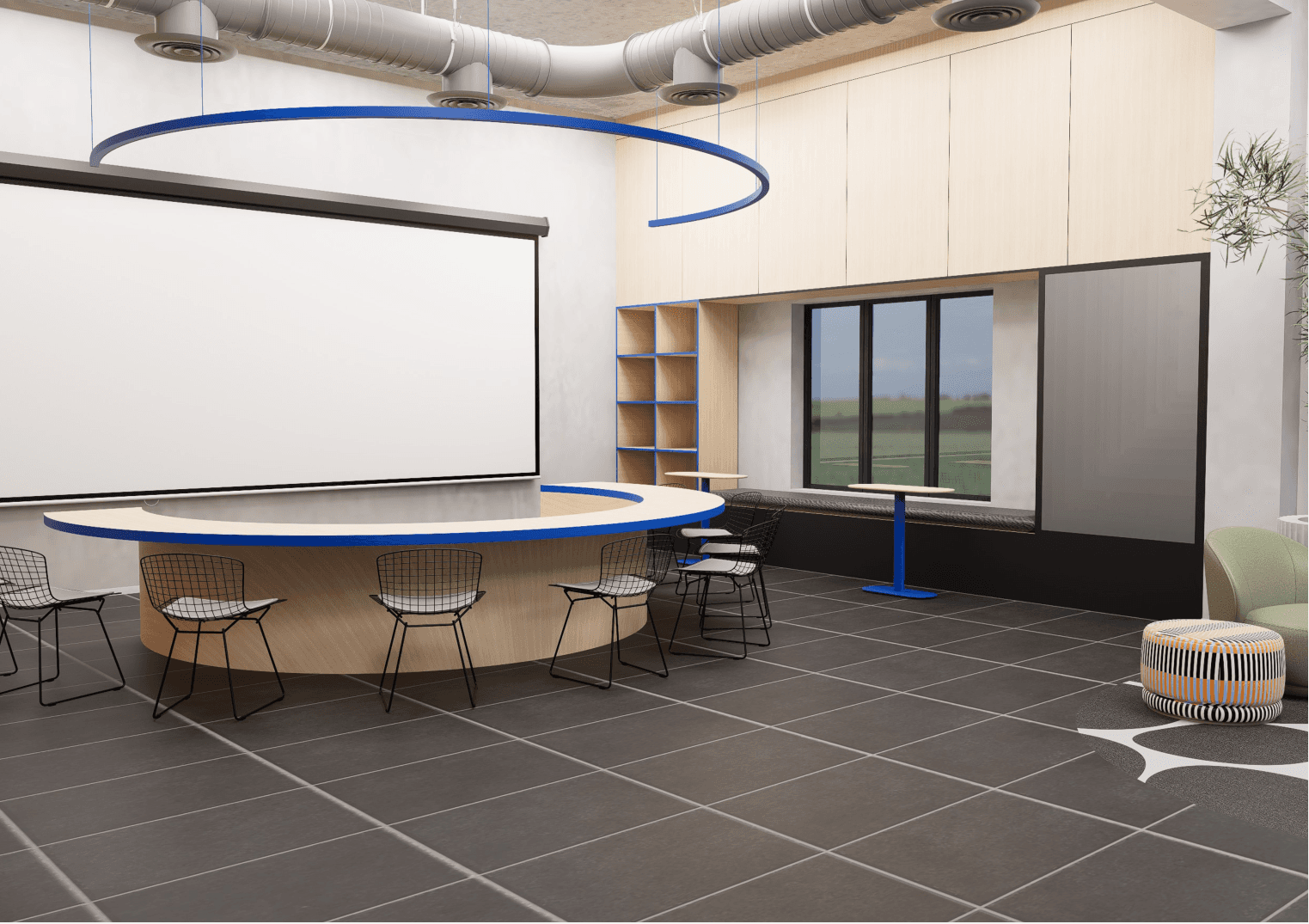
The KINFRA Advanced Technology Park in Calicut Technology Park is a government campus. 2 acres. 24/7 security. Hostel facilities available. The environment is structured and professional in a way that a rented classroom building cannot replicate. Students are in a work environment, not a study environment. That distinction matters more than most people realise.
(ATTATCH CLASSROOM PHOTOS)
North Kerala — Kozhikode, Malappuram, Kannur, and the broader Malabar belt — has a large base of trading businesses, Gulf-return entrepreneurs, and growing consumer demand across health, food, home services, and events. Borewell drilling, event management, organic food, construction — these are not niche markets here. They are active sectors with real demand and very limited organised, digitally-capable players.
Several of the best business ideas in India — organic food branding, trade services, digital marketing agencies — map directly onto what North Kerala consumers and businesses actually need.
Jaseem's Waterbro is proof of this. A service that exists everywhere in Kerala but almost no operator in Malabar understands digital marketing or has a sales process beyond word of mouth. That gap is a business.
Sahl's Organics of Kerala follows the same logic. Kerala's consumer awareness around health food, clean ingredients, and locally sourced products is genuine and growing. The moringa powder category has real demand. Very few operators are selling it with a proper brand, proper packaging, and a digital acquisition strategy.
For a graduate starting a business in Kerala right now, the competitive advantage is not being first in a category. It is being the first in that category who can sell online.
MBA Theory or Real Business Skills? What Kerala Graduates Who Built Companies Actually Chose
Many graduates face the same confusion: pursue an MBA degree courses, or take a specialised program?
An MBA degree courses makes sense for a specific path — corporate finance, management consulting, leadership roles in large organisations. The degree is a credential in those worlds. A two-year MBA in India costs between ₹10 and ₹30 lakhs depending on the institution, takes two full years out of your life, and ends with a placement that may or may not be in business-building roles.
A specialised program like EDEAS makes sense if your goal is to build or run a business within the next 12 to 18 months. It costs significantly less, takes 9 months, and puts you inside a real business environment from the first week.
Here is the functional difference: a student in MBA degree courses learns about marketing theory. An EDEAS student runs an actual campaign, measures the results, and adjusts. One is studying sales psychology. The other is on the phone handling live objections.
The MBA also does not teach you how to use Shopify, run a Helium10 product search, build a WhatsApp Business automation, or produce content with DaVinci Resolve. These are the operational tools of a modern business. A graduate who knows them has a real advantage over one who only knows theory.
The ₹20 lakhs in student-generated product & service sales during the EDEAS program is not a marketing claim. It is what separates a course that talks about business from one that builds it.
The Two Questions That Actually Decide Whether This Course Is Right for You
These are real questions that come up repeatedly. Answered directly.
Q: I am already running a business — how will EDEAS help me scale it?
A: If your business has stuck at a certain point, We addresses the most common causes, we help you to find what is actually causing that stuck. And we help resolve that problem. If you are stuck, this program was built for exactly that stage.
Q: Is 9 months really necessary, or is it too long?
A: Nine months is not just classroom time — it is the minimum required to cover entrepreneurship, digital marketing, e-commerce, AI strategy, and live sales execution at a depth that is actually useful. Each module builds on the previous one. Compressing this into a 3-month sprint produces surface-level knowledge that collapses under real business conditions. Nine months produces someone who has run real campaigns, made real sales, handled real failure, and has the confidence to operate a functioning business from day one after graduation.
How to Evaluate the Best Course After Graduation to Start a Business in Kerala
Not all courses are equal and the difference is not always obvious from the brochure. Here is how to actually evaluate one.
Does the program produce real sales? Not case studies. Not simulations. Actual transactions with actual customers. EDEAS students generated ₹20 lakhs in real sales during the program. Ask any other course in Kerala the same question.
Who is teaching it? Not academics. Not agency employees. Founders who built businesses, faced failure, and scaled past it. The EDEAS mentors come from IIM, IIT, and NIT backgrounds and have built internationally operating brands — one expanded to 6 countries. That is the mentorship standard.
Does the program have a written outcome guarantee? Verbal promises are easy to make. EDEAS offers a written placement guarantee with a refund clause. That is a material commitment, not a marketing line.
Does the curriculum cover the tools you will actually use? Not just the names of platforms, but hands-on execution. Shopify setup. Meta ads. WhatsApp Business campaigns. Helium10 for product research. DaVinci Resolve for video. Google Analytics 4 for tracking. These are the daily tools of a working business owner.
Is the campus environment professional? The environment you train in shapes the habits you develop. KINFRA Advanced Technology Park is a government technology campus, not a rented building. The peer group is serious. The structure is corporate-grade.
If a course cannot answer all five of those questions with specifics, it is not the right course.
The Next Step Takes 10 Seconds. The Results Take 9 Months.
Stop reading about other people's businesses and start building yours — call or WhatsApp Junaid directly on +917736477707, tell him you read this blog, and ask if there is a seat available in the next EDEAS batch. Once you are inside that campus, every day moves you closer to a working business with real customers and real revenue.
Email: ai.escala.ai@gmail.com Website: https://www.iidtescala.com/ Call or WhatsApp: +917736477707
INTERNAL LINK: visit the KINFRA campus and hostel facilities page → /home]
About the Author
Junaid Ahammed is a NIT Calicut alumnus and mentor at IIDT Escala, where he works with the EDEAS cohort on digital marketing strategy, e-commerce, and business building. IIDT Escala is Kerala's first Digital AI Academy, founded by IIM, IIT, and NIT entrepreneurs, operating from KINFRA Advanced Technology Park, Kozhikode. Helping people who are really passionate about their career.
INTERNAL LINK - ABOUT US PAGE https://www.iidtescala.com/about-us
Frequently Asked Questions
How do the Rs.20 lakhs in product and service sales actually work?
Every EDEAS student executes real business transactions — selling actual products and services to real customers outside the classroom. Some sell physical products, others sell digital services, courses, or trades. The Rs.20 lakhs is the collective batch output, not a fixed personal target — how much an individual generates depends on their business model, execution speed, and effort level. The number can increase or decrease based on what is being sold. The purpose is not the figure itself but the experience of completing a full sales cycle with real rejection, follow-up, and closing.
What will I actually learn in 9 months that helps my business?
The curriculum covers every stage of building a business: product identification using Helium10, digital marketing across Meta and Google, e-commerce via Shopify and Amazon, AI and automation integration, live sales execution including telecalling and closing, content production using Canva and DaVinci Resolve, and post-sales growth through CRO, SEO, and CRM systems. You also execute real sales during the program. By graduation, you have the skills to run a functional, revenue-generating business — not just the knowledge of how one is supposed to work.
Why does the course cost Rs.2 lakhs — and is it worth it?
The Rs.2 lakhs is not for 9 months of classes. It is for full-time mentorship from founders who have built internationally operating businesses. When your business runs into a problem — and it will — the faculty help you identify what is actually wrong and what the right decision is. That is not a teaching service, it is a business advisory relationship. The alternative is spending 2 to 3 years and potentially Rs.5 to 10 lakhs learning those same lessons through failure. The Rs.2 lakhs is the faster, cheaper path to a working business.
If I start a business through EDEAS and it runs at a loss, what happens?
Before any student commits to a business idea, EDEAS runs a structured analysis: idea validation, financial modelling, and loss ratio assessment. If the model shows a high probability of sustained loss, the faculty do not encourage it. The program teaches students to start small — validate customer interest, check for repeat purchases, confirm demand before scaling any significant investment. You do not put lakhs into a business before you know it works. The program is specifically designed to de-risk the early stage, not rush you into it.
I want to start a business but I have no ideas — how will EDEAS help?
The EDEAS faculty are themselves running multiple businesses simultaneously. Many of their business ideas are sitting unexecuted simply because of time constraints and the absence of a specialist team to implement them. During the program, they help students identify, evaluate, and implement business ideas that match their skills, market access, and available capital. If you arrive with no idea, you will leave with one that has been validated, financially modelled, and partially executed before graduation.
How do I go from starting a business to international expansion in 9 months?
You do not — and any program that promises that is misrepresenting how businesses are built. International expansion is a 2 to 4 year journey for most businesses. What EDEAS provides is full-time mentorship from founders who have already made that journey themselves. The curriculum takes you from idea validation to building a functioning local business, and the mentorship continues beyond graduation as you scale. When your business reaches the stage where international expansion is the right next move, the faculty are there to guide it — having done it themselves.
Is an MBA a better option than EDEAS for starting a business in Kerala?
Depends entirely on your goal. An MBA from a reputable institution costs Rs.10 to 30 lakhs, takes 2 years, and prepares you for corporate management roles. EDEAS costs Rs.2 lakhs, takes 9 months, and prepares you to operate a business. If you want to run a company in Kerala with real growth potential in the next 2 to 3 years, EDEAS delivers that faster and at a fraction of the cost. If you want a senior corporate career at a large organisation, the MBA degree has value that EDEAS does not claim to replicate — and that is an honest distinction worth knowing before you decide.